When the Power Goes Out, How Long Will Your Generator Last?
If you’re considering a whole-home generator—or already have one—one of the most common questions is: how long can it actually run?
The answer depends on several factors, including fuel type, generator size, and how much power your home is using during the outage. For homeowners in Charlotte and Mint Hill, understanding runtime is especially important heading into storm season.
What Determines Generator Runtime?
Whole-home generators are designed to run for extended periods, but they aren’t unlimited. Here’s what impacts how long yours can operate:
1. Fuel Type
Most standby generators run on one of the following:
- Natural Gas
- Continuous supply from your utility line
- Can run indefinitely (as long as gas service is uninterrupted)
- Propane
- Stored in a tank on your property
- Runtime depends on tank size (commonly 250–1,000 gallons)
- Diesel (less common for residential)
- Requires stored fuel
- Typically used for commercial or large-scale backup systems
2. Fuel Tank Size (For Propane Systems)
If your generator runs on propane, your runtime depends heavily on how much fuel you have available.
Example:
- A 500-gallon propane tank (usable ~400 gallons)
- Generator consumption: ~2–3 gallons per hour at partial load
This could provide 5–10 days of runtime, depending on usage.
3. Power Demand (Load)
The more appliances and systems your generator is powering, the more fuel it uses.
Running essentials only (HVAC, refrigerator, lights) will extend runtime compared to powering your entire home, including:
- Electric water heaters
- Pool equipment
- Multiple HVAC units
4. Generator Size & Efficiency
Larger generators consume more fuel—but they also handle higher demand more efficiently.
A properly sized generator:
- Prevents overload
- Optimizes fuel usage
- Ensures longer, more reliable operation
5. How Long Can a Generator Run?
Most modern whole-home generators are designed to run for days or even weeks when properly maintained.
- Natural gas systems: Essentially unlimited runtime
- Propane systems: Limited by tank size but can run for days
- Automatic operation: Turns on/off as needed, conserving fuel
Routine maintenance and oil checks are critical during extended outages.
6. What Happens During Extended Outages?
In longer outages—like those caused by severe storms in the Charlotte area—your generator will:
- Automatically start when power is lost
- Cycle as needed depending on demand
- Shut off once utility power is restored
For propane systems, you may need to:
- Monitor fuel levels
- Schedule refueling if outages last beyond several days
How to Maximize Generator Runtime
To get the most out of your generator during an outage:
- Prioritize essential circuits
- Schedule regular maintenance
- Keep fuel levels topped off (for propane systems)
- Install a professionally sized system
A customized setup ensures you’re not wasting fuel—or risking downtime.
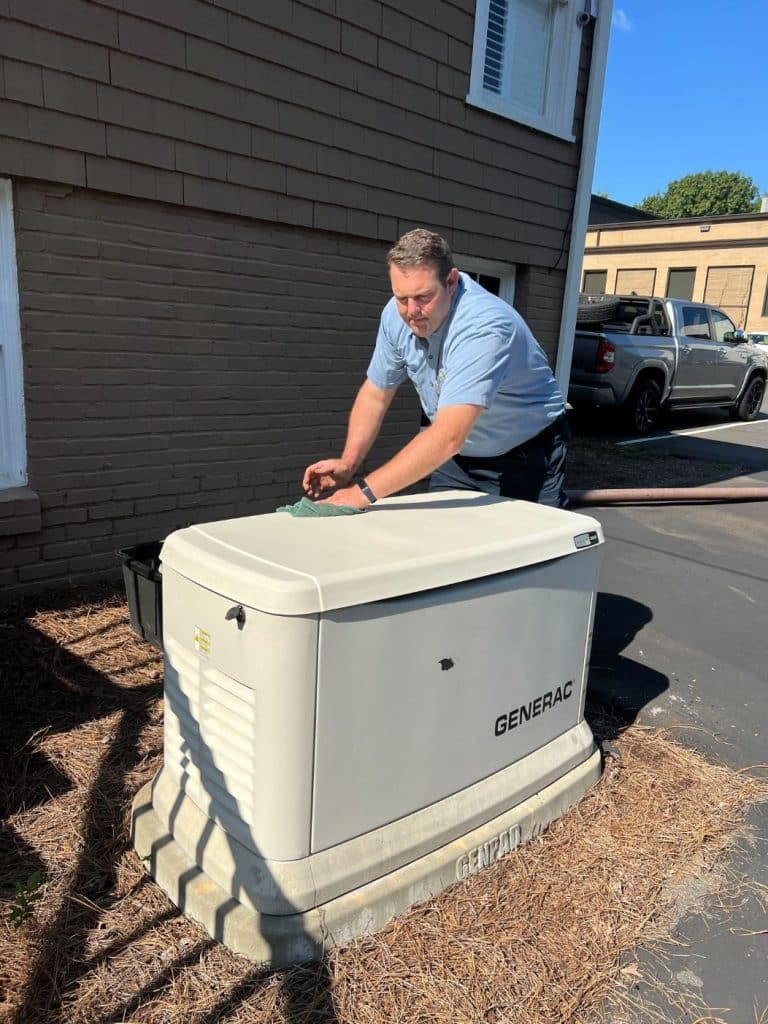
Choosing the Right Generator for Your Home
Not all generators are built the same. Choosing the right system for your home in Mint Hill or Charlotte means balancing:
- Home size
- Power needs
- Fuel availability
- Budget
Working with a certified generator installer helps ensure your system performs when you need it most.
Be Ready Before the Next Storm
Power outages aren’t always predictable, but your backup plan can be.
A whole-home generator provides peace of mind knowing your home can stay powered for as long as needed, whether it’s a few hours or several days.
If you’re thinking about installing a generator or want to make sure your current system is ready for storm season, the team at GB Electrical Services is here to help. We’ll walk you through the best options for your home and ensure your system is sized, installed, and maintained for reliable performance.